
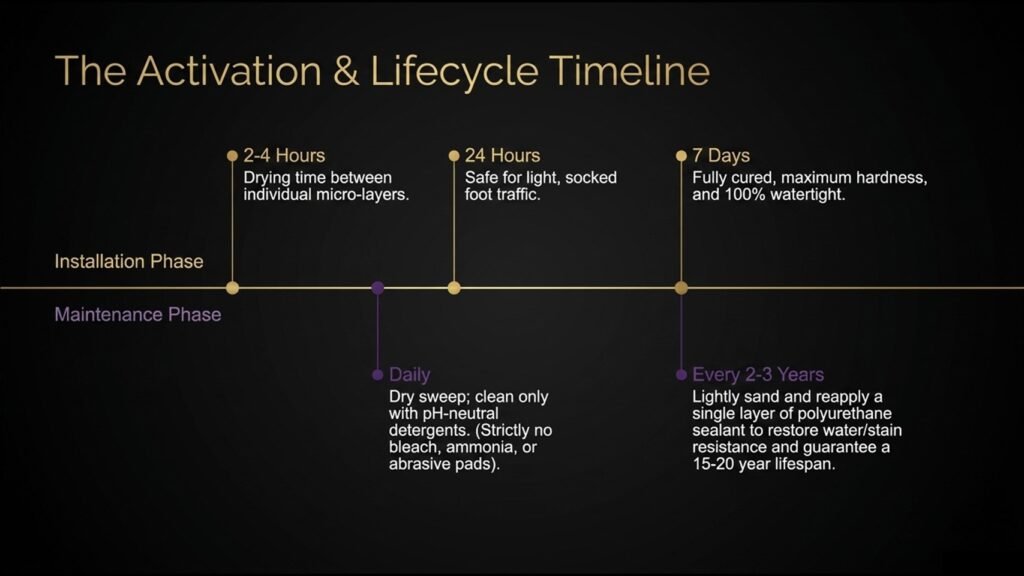
The Activation & Lifecycle Timeline of Microcement
A complete roadmap detailing initial layer drying times, structural curing milestones, daily maintenance protocols, and long-term polyurethane resealing for a 20-year lifespan.
Microcement is an engineered surface system designed to combine modern architectural minimalism with long-term resilience. However, realizing its maximum performance depends on respecting its hydration and chemical curing phases during installation, followed by appropriate maintenance practices over its operational life.
Installation Phase: Curing Milestones
The installation phase governs the initial bonding, hardness development, and waterproofing activation of the microcement system. Respecting these curing intervals prevents early surface damage and guarantees proper sealer adhesion.
Micro-Layer Drying Time
Drying time required between individual micro-layers to ensure moisture evaporation and proper mechanical bonding.
Initial Access
Surface is safe for light, socked foot traffic. Heavy boots, tools, and liquids must still be strictly avoided.
Full Chemical Cure
Fully cured system achieving maximum compressive hardness, chemical resistance, and 100% watertight seal.
Maintenance Phase: Care & Resealing Protocols
Once fully cured at the 7-day mark, microcement enters its active service life. Simple daily care combined with periodic topcoat renewal ensures the surface maintains its aesthetic appeal and structural performance indefinitely.
Routine Care
Dry sweep; clean only with pH-neutral detergents. (Strictly no bleach, ammonia, or abrasive pads).
Polyurethane Renewal
Lightly sand and reapply a single layer of polyurethane sealant to restore water/stain resistance and guarantee a 15-20 year lifespan.
Essential Cleaning Rules for Maximum Longevity
While microcement sealed with polyurethane or epoxy resists water and daily wear, strong chemical agents can slowly degrade the protective sealer coat over time. Adhering to neutral cleaning agents is crucial:
- Allowed Cleaners: Microfiber cloths, soft mops, warm water, and specialized pH-neutral cleaners or mild soaps.
- Prohibited Cleaners: Bleach, acidic solutions, ammonia, lime-scale removers, and abrasive scouring pads that can scratch the sealer coat.
Periodic Polyurethane Resealing for 15-20 Year Lifespan
Unlike traditional tiles which require complete tear-outs when worn, microcement features a renewable surface layer. Every 2 to 3 years—depending on foot traffic and exposure—the floor can be given a quick maintenance treatment. By lightly sanding the top surface and applying a fresh coat of polyurethane sealer, the original stain barrier and waterproofing are restored, effortlessly extending the overall lifespan of the floor to 15 to 20 years.
Lifecycle Takeaway
Understanding the microcement timeline ensures flawless results: respect the 7-day full curing period prior to heavy usage, stick to pH-neutral daily maintenance, and perform a simple topcoat refresh every 2-3 years. Following these basic engineering steps delivers a seamless, high-performance surface engineered to last decades.